
If you’ve ever stared at a blank wall above your sofa, wondering what on earth to put there, you’re not alone. Choosing wall art can feel surprisingly overwhelming — the wrong size, the wrong shape, and the whole room feels off. But here’s a secret that interior designers lean on constantly: square wall art is one of the most forgiving, versatile, and effortlessly stylish formats you can choose for a family home.
Equal sides mean instant visual balance. Square pieces work above furniture, in gallery grids, in nurseries, in hallways — practically anywhere. Whether you’re decorating a cozy living room or freshening up a kid’s bedroom, this guide covers everything you need to know about square wall art, from choosing the right size to styling it for your home’s personality.
1. What Makes Square Wall Art So Versatile
Square wall art has one obvious defining feature — equal width and height — but the design implications of that simple fact run deeper than you might expect. Because neither dimension dominates, the eye is drawn directly to the subject matter rather than the shape of the piece itself. That makes it ideal for art with strong central compositions: a face, a flower, an abstract shape, a landscape centered on the horizon.
Unlike a wide horizontal print that demands a large sofa or bed to anchor it, or a tall portrait piece that needs a high ceiling to breathe, a square print is proportionally flexible. It works in small nooks, large statement walls, and every size in between. It can hang alone as a focal point or multiply into a satisfying grid.
For a curated selection of original artist-made square shape wall art, collections like ArtByMaudsch offer rolled canvas paintings with a premium gallery feel — think expressive originals like “Patches of Snow” or “Golden Dandelion,” each available in a classic 20×20 inch (50x50cm) format that’s perfectly proportioned for living rooms, bedrooms, and entryways.
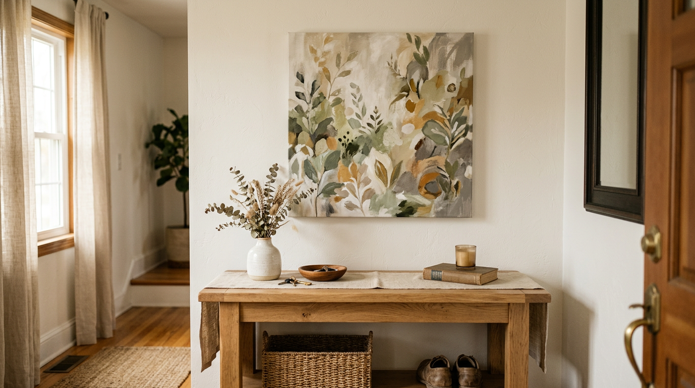
A single square canvas print displayed above a wooden console table in a warm, lived-in entryway with neutral tones
2. Types and Materials: Picking the Right Finish
Square wall art comes in more materials than most people realize. The right one depends on the room, the vibe you’re going for, and your budget.
- Canvas prints: The warm, painterly classic. Archival-quality canvas prints can last 80+ years without visible fading, making them a genuinely long-term investment. They wrap around a timber stretcher frame for a gallery-ready look and work beautifully in living rooms and bedrooms.
- Metal prints: Printed via dye-sublimation onto aluminum sheets, these have razor-sharp color and are water- and scratch-resistant. Available in square formats up to 47×47 inches, they’re perfect for kitchens and bathrooms where moisture is a concern.
- Framed prints: If you love a classic look, framed square prints in black, white, walnut, or matte gold add a polished, finished feel. Shadow-gap frame designs add subtle depth.
- Acrylic prints: Ultra-modern with a light-refracting, almost backlit quality. Shatterproof and UV-resistant — a great choice for contemporary spaces.
- Paper posters: The most affordable option. Ideal for kids’ rooms where tastes change fast, or for seasonal swaps when you want to refresh a space without committing.
Quick Tip: Canvas is the most universally loved material for family homes because it adds warmth and texture that photographs and digital prints can’t replicate.
3. The Real Benefits of Square Over Other Shapes
Why choose square over a standard rectangular or horizontal print? Here’s what makes the format stand out for real family homes:
- No orientation restriction. A square can hang in any direction — even tilted at a slight angle for an artistic effect. Landscape, portrait, abstract — all equally at home in a square frame.
- Gallery wall versatility. A grid of identically sized square prints (2×2, 3×3, or 4×4) is one of the cleanest, most satisfying looks in home décor. Consistent sizing makes planning and hanging dramatically easier.
- Works in any décor style. Farmhouse, Scandinavian, mid-century modern, bohemian, and industrial — square art adapts to all of them. The shape itself is neutral; the art content does the stylistic heavy lifting.
- Compact wall footprint. Square pieces take up less vertical space than portrait prints and less horizontal space than landscape pieces. In smaller rooms, that balance matters.
- Inherent symmetry. For family homes that see real, lived-in use, a visually balanced square piece creates calm order — even when the toys are on the floor.
4. Best Rooms for Square Wall Art in a Family Home
One of the biggest advantages of square wall art is that it genuinely works in every room. Here’s how to think about placement room by room:
Living Room: A group of four square canvas prints above the sofa — each around 20-24 inches — creates a cohesive gallery wall. Alternatively, one oversized 36×36 inch statement piece makes a bold focal point. Pair with sconces on either side for a layered, designer look.
Bedroom: A large square print centered above the headboard is one of the most classic bedroom moves. Choose calming blues, soft greens, or warm neutrals that you’ll love waking up to. Position the art is visible from the bed.
Nursery and Kids’ Rooms: Small square prints (12×12 inches) in cheerful colors are perfect here. Paper posters or affordable canvas prints make sense since children’s tastes evolve quickly and you’ll likely want to update the look as they grow.
Kitchen: This is where metal square prints shine. Moisture-resistant and easy to wipe clean, metal prints in botanical, herb, or food art themes add personality without worrying about humidity damage.
Home Office: A single minimalist abstract square print — clean lines, simple color palette — keeps the space inspiring without becoming distracting. Focus matters in a workspace.
Entryway: A single square print creates a warm first impression as guests walk in. Or create a vertical stack of two or three smaller squares along a narrow hallway for a thoughtful, gallery-like corridor.
Bathroom: A 12×12-inch metal square print is ideal for small, humid bathrooms. It’s durable, waterproof, and adds a spa-like sophistication.
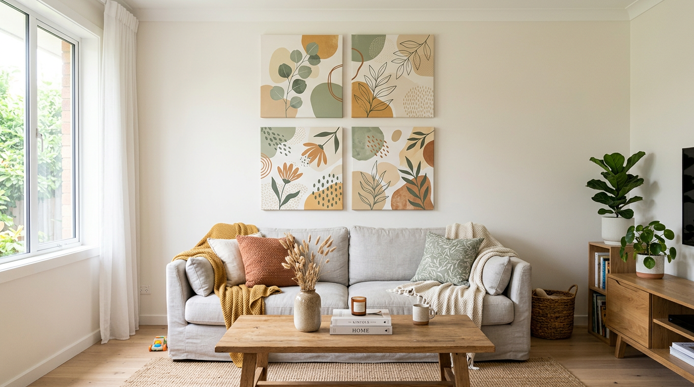
A 2×2 grid of square canvas prints displayed above a sofa in a bright family living room with a light linen couch and a wooden coffee table
5. How to Arrange Square Wall Art Like a Designer
The arrangement is just as important as the art itself. Here are the most popular approaches:
- Grid formation: The cleanest look. A 2×2 grid (4 pieces) or 3×3 grid (9 pieces) with consistent 3-inch spacing between frames. Choose prints with a cohesive color palette for a polished, intentional result.
- Symmetrical arrangement: Two square prints centered side by side above a piece of furniture. Formal and balanced — great for family homes with a traditional or transitional style.
- Staggered/asymmetrical: Offset a cluster of square prints at varying heights for a more casual, eclectic vibe. Works especially well in bohemian or creative household spaces.
- Mixed with other shapes: Combine square prints with a round mirror or a horizontal piece for a dynamic gallery wall with visual rhythm.
Pro Tip: Before drilling a single hole, lay your prints on the floor in the arrangement you want, trace around them on kraft paper, cut the paper shapes out, and tape them to the wall. Live with the mock-up for a day before committing — it saves a lot of spackle.
6. Choosing the Right Size Square Wall Art
Getting the size right is the most common challenge, and the stakes feel high when you’re standing in the hardware store holding a tape measure. Here’s a cheat sheet:
- Above a sofa: Art should span roughly two-thirds to three-quarters of the sofa’s width. A single 36×36-inch canvas or a pair of 24×24-inch prints works beautifully for a standard 84-inch sofa.
- Large statement wall: Fill two-thirds to three-quarters of the wall width for real impact. Oversized 40×40-inch or larger prints make a confident statement in open-plan spaces.
- Small walls and nooks: A 12×12- to 20×20-inch piece creates a cozy, intentional feel without overwhelming the space.
- Eye level rule: Center your art at 57 to 60 inches from the floor to the center of the piece. This is the gallery standard and the most comfortable viewing height for most adults.
- Above furniture: The bottom edge of your frame should sit 6 to 12 inches above the furniture surface below it — close enough to feel connected, but not so close it looks crowded.
Family Favorite: The 20×20-inch format is a sweet spot for family homes — large enough to make an impression, small enough to fit in almost any room.
7. Square Wall Art Trends for 2025
The wall art world moves quickly, and square formats are right at the center of many of the biggest trends this year:
- Nature-inspired and earth tones: Ochre, terracotta, deep botanical greens, and warm sandy neutrals are everywhere. These colors feel grounding and work beautifully in family spaces that need to feel calming.
- Abstract and minimalist: Clean geometric forms, simple brushwork, and restrained color palettes continue to dominate contemporary home decor. They’re timeless in the best possible way.
- Oversized statement pieces: One large-format square canvas as the room’s single hero piece — bold, confident, and surprisingly easy to style around.
- Curated grid gallery walls: Sets of four or nine matching square prints in coordinated color palettes. These look considered and cohesive without requiring an interior design degree.
- Personalized and custom art: Family photos in square crop, custom illustrated portraits, personalized map prints — these bring warmth and story to a family home that no mass-market print can replicate.
- Eco-conscious materials: Sustainable wood frames, recycled materials, water-based archival inks, and biodegradable packaging are increasingly important to buyers. Supporting independent artists is itself a form of ethical consumption compared to mass-produced decor.
8. Matching Square Art to Your Home’s Style
Not sure what style of square wall art suits your home? Here’s a quick match guide:
- Modern/Contemporary: Minimalist abstracts, geometric patterns, monochrome photography.
- Farmhouse/Rustic: Botanical prints, landscape paintings, distressed frames, warm earth tones.
- Scandinavian/Hygge: Simple line art, muted tones, cozy nature themes with minimal color.
- Mid-Century Modern: Bold geometric shapes, muted retro palettes, warm wood frames.
- Bohemian: Layered textures, earthy abstracts, woven square tapestries, global-inspired motifs.
- Traditional/Classic: Fine art prints in walnut, gold, or dark wood frames with mat borders.
- Industrial: Black-and-white photography, metallic print finishes, architectural subjects.
When in doubt, choose art that reflects something your family genuinely loves — a landscape from a meaningful trip, a botanical print of a plant you grow, an abstract in the colors already present in your room.
9. Square Wall Art for Families: Personalization and Sentiment
The most meaningful wall art in a family home isn’t always the most expensive — it’s the most personal. Square formats are particularly well-suited for personalization because the equal dimensions create a natural frame for close-up subjects: faces, flowers, meaningful objects, and favorite places.
- Family photo grids: A 2×2 or 3×3 arrangement of square-cropped family photos on canvas brings a gallery wall to life with genuine meaning. Order prints from your favorite photos and group them by color tone for a cohesive look.
- Children’s artwork on canvas: Have your child’s artwork transferred to a square canvas print. It becomes a cherished keepsake and the proudest display in your home.
- Original commissioned art: Artist-created works — like the original canvas paintings available from curated art boutiques — offer genuine heirloom quality. These are pieces you’ll pass on, not replace with the next trend.
- Personalized maps and milestone prints: Custom city maps, coordinates of meaningful places, or milestone art for nurseries add narrative depth that store-bought prints simply can’t match.
10. What to Expect at Every Price Point
Square wall art is available at every budget. Here’s an honest breakdown:
- Budget ($5–$50): Digital downloads and paper posters. Etsy, Society6, and Desenio are great sources. Print at a local shop and frame it
- Mid-range ($50–$200): Quality canvas and framed prints from retailers like Wayfair, Art.com, and Amazon. Good selection of styles and sizes.
- Premium ($200–$500): Original artist-curated canvas pieces from independent artists and boutique art sites. Higher quality materials, longer-lasting prints, and genuine artistic vision.
- Investment ($500+): Original hand-painted pieces and custom commissions. These are art collection territory — pieces that define a room for decades.
Money-saving tip: Buy smaller square prints and group them into a 2×2 or 3×3 grid. A set of four 12×12 prints often costs less than one large canvas but creates an even more striking visual impact on the wall.
11. Hanging Square Wall Art: Common Mistakes to Avoid
Even the most beautiful square wall art can fall flat if it’s hung wrong. Here are the most common mistakes and how to sidestep them:
- Hanging too high. The most frequent error in home decorating. Art hung too high floats disconnected from the furniture below it. Keep the center of the piece at 57–60 inches from the floor.
- Spacing frames unevenly. Use a measuring tape and aim for consistent 3-inch gaps between frames in a grid. Uneven spacing immediately undermines the polished look you’re going for.
- Skipping the mock-up. Use painter’s tape or paper cut-outs on the wall before making any holes. It takes 10 minutes and saves hours of patching.
- Ignoring wall studs for heavy pieces. Canvas prints are lightweight, but metal prints and large framed pieces need to be anchored into studs. Use a stud finder.
- Forgetting lighting. A small picture light above a canvas print or side lighting from a nearby lamp dramatically enhances the texture and richness of the artwork. It’s a simple upgrade with a big impact.
Final Thoughts
Square wall art is one of the most practical, beautiful, and family-friendly choices you can make for your walls. The format adapts to every room, every style, every budget, and every life stage — from a cheerful nursery grid to a sophisticated living room statement piece to a hallway full of memories.
The best wall art in a family home is the art that means something. Start with one room, choose something that genuinely resonates, hang it at the right height, and step back. A blank wall is just an opportunity waiting for the right piece.
 Hector Glassmanstiff writes the kind of family activities and bonding ideas content that people actually send to each other. Not because it's flashy or controversial, but because it's the sort of thing where you read it and immediately think of three people who need to see it. Hector has a talent for identifying the questions that a lot of people have but haven't quite figured out how to articulate yet — and then answering them properly.
They covers a lot of ground: Family Activities and Bonding Ideas, Child Development Resources, Parenting Tips and Advice, and plenty of adjacent territory that doesn't always get treated with the same seriousness. The consistency across all of it is a certain kind of respect for the reader. Hector doesn't assume people are stupid, and they doesn't assume they know everything either. They writes for someone who is genuinely trying to figure something out — because that's usually who's actually reading. That assumption shapes everything from how they structures an explanation to how much background they includes before getting to the point.
Beyond the practical stuff, there's something in Hector's writing that reflects a real investment in the subject — not performed enthusiasm, but the kind of sustained interest that produces insight over time. They has been paying attention to family activities and bonding ideas long enough that they notices things a more casual observer would miss. That depth shows up in the work in ways that are hard to fake.
Hector Glassmanstiff writes the kind of family activities and bonding ideas content that people actually send to each other. Not because it's flashy or controversial, but because it's the sort of thing where you read it and immediately think of three people who need to see it. Hector has a talent for identifying the questions that a lot of people have but haven't quite figured out how to articulate yet — and then answering them properly.
They covers a lot of ground: Family Activities and Bonding Ideas, Child Development Resources, Parenting Tips and Advice, and plenty of adjacent territory that doesn't always get treated with the same seriousness. The consistency across all of it is a certain kind of respect for the reader. Hector doesn't assume people are stupid, and they doesn't assume they know everything either. They writes for someone who is genuinely trying to figure something out — because that's usually who's actually reading. That assumption shapes everything from how they structures an explanation to how much background they includes before getting to the point.
Beyond the practical stuff, there's something in Hector's writing that reflects a real investment in the subject — not performed enthusiasm, but the kind of sustained interest that produces insight over time. They has been paying attention to family activities and bonding ideas long enough that they notices things a more casual observer would miss. That depth shows up in the work in ways that are hard to fake.